Vespa Scooters
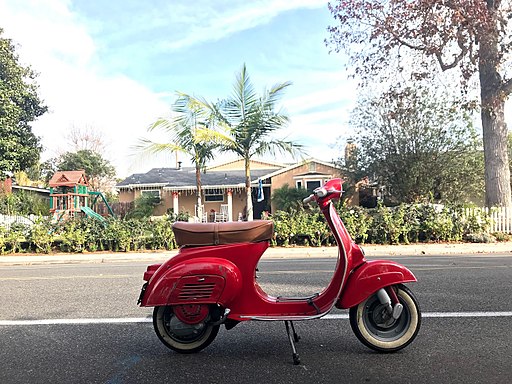
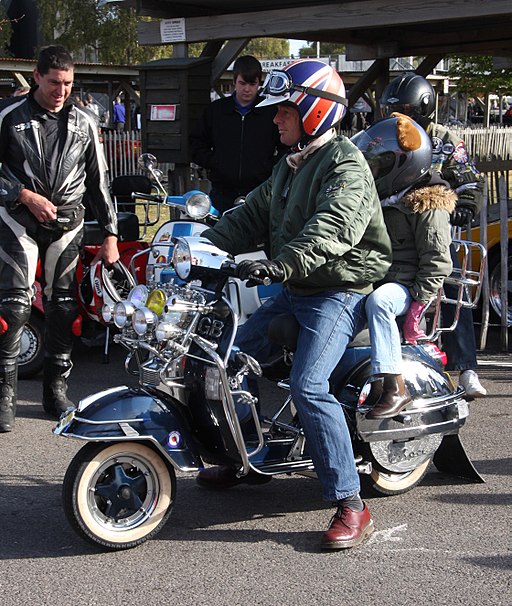
Vespa is an Italian brand of scooter manufactured by Piaggio. The name means wasp in Italian. The Vespa has evolved from a single model motor scooter manufactured in 1946 by Piaggio & Co. S.p.A. of Pontedera, Italy, to a full line of scooters and one of seven companies today owned by Piaggio.
From their inception, Vespa scooters have been known for their painted, pressed steel unibody which combines a complete cowling for the engine (enclosing the engine mechanism and concealing dirt or grease), a flat floorboard (providing foot protection), and a prominent front fairing (providing wind protection) into a structural unit.
Why a wasp?
Upon seeing the MP6 for the first time, Enrico Piaggio exclaimed: "Sembra una vespa!" ("It resembles a wasp!") Piaggio effectively named his new scooter on the spot. Vespa is both Latin and Italian for wasp — derived from the vehicle's body shape: The thicker rear part connected to the front part by a narrow waist, and the steering rod resembled antennae.
Back in the USA
Vespa returned to the U.S. market in 2001 with a new, more modern-style ET series, in 50cc two- and four-stroke, and 150cc four-stroke. According to the Motorcycle Industry Council, U.S. scooter sales increased fivefold over six years, swelling from 12,000 units in 1997 to 69,000 units in 2002. Vespa sales in the U.S. increased 27 percent between 2001 and 2002. In 2005, the ET was withdrawn from Europe and North America and replaced by a new small-frame scooter, the LX range. These were available in the U.S. in 50cc and 150cc versions, while Europeans could choose a 50cc, 125cc and 150cc.
Text copied from Wikipedia entry: Vespa